Role
Industry
Year
Approach: Turning a dense PRD into user flows and design systems
I started by immersing myself in the PRD, dissecting it into user flows and key requirements. From there, I researched competitors like Binance, Quidax, and Yellow Card to understand where users struggled and where we could stand out. Alongside this, I built a lightweight visual identity to give Pinex a consistent and trustworthy look from day one.
Read and annotated the PRD to map requirements → user flows.
Conducted competitive research (Binance, Quidax, Yellow Card).
Ran informal usability tests with peers/team.
Created lightweight brand system (colors, typography, icons) to ensure trust + consistency.
Challenges: Balancing simplicity for beginners with depth for experts
The biggest hurdle was translating a dense PRD into something that felt natural for users. Crypto dashboards often bombard people with information, so my focus became: how do we make this less overwhelming without losing functionality? This meant making tough decisions about what to prioritize and how to reveal complexity progressively.
Translating a dense PRD into user-friendly, intuitive flows.
Balancing simplicity for beginners with power for experienced users.
Avoiding overwhelming dashboards by focusing on progressive disclosure.
Solution: Designing Crypto Confidence, End-to-End
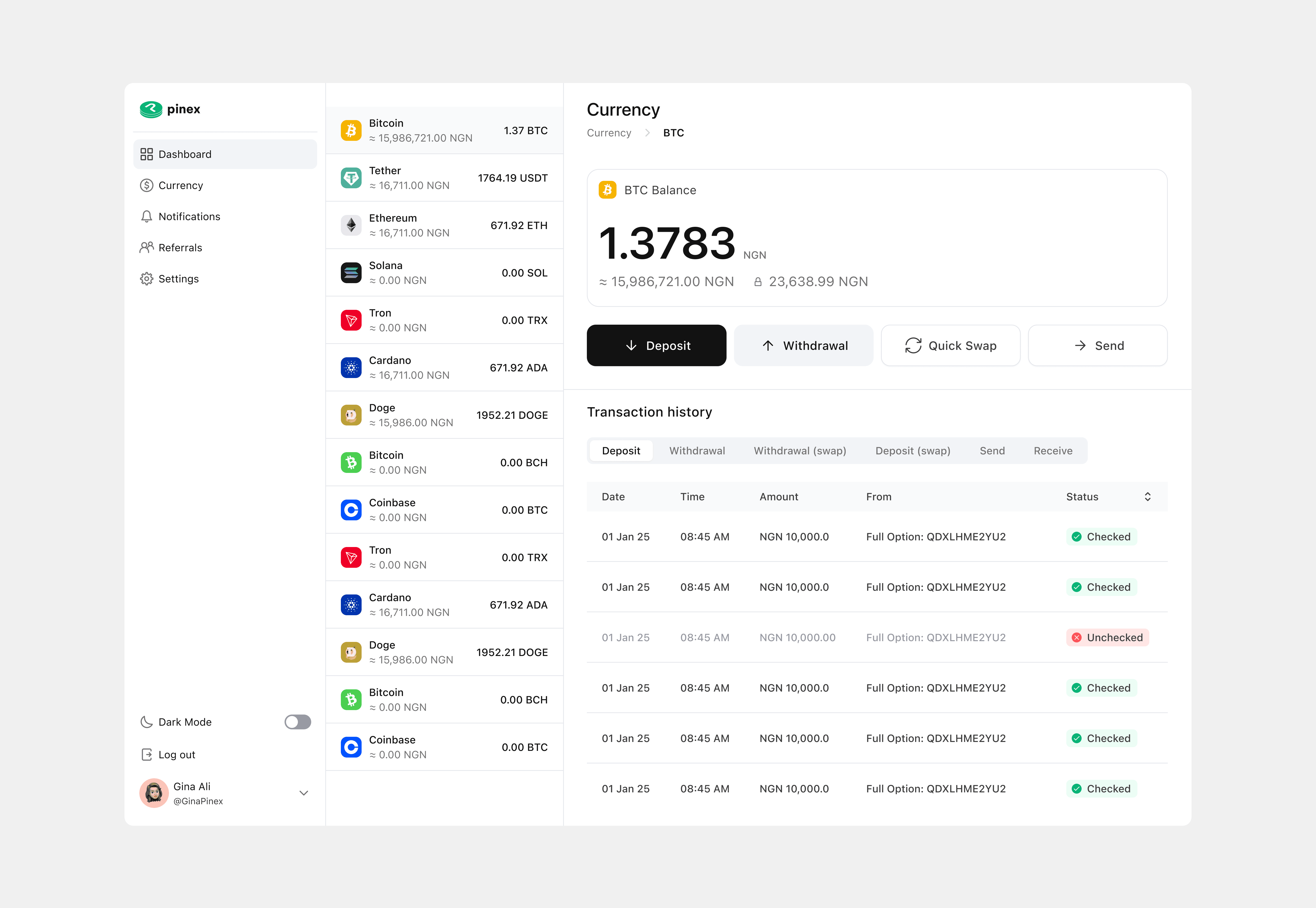
The solution was an end-to-end experience that made managing multi-currency transactions feel intuitive and stress-free. Progressive disclosure played a key role, surfacing only what users needed at each step while keeping advanced tools just a click away. By combining simplicity with depth, the product delivered clarity for new users and efficiency for power users, building trust in an otherwise complex financial space.
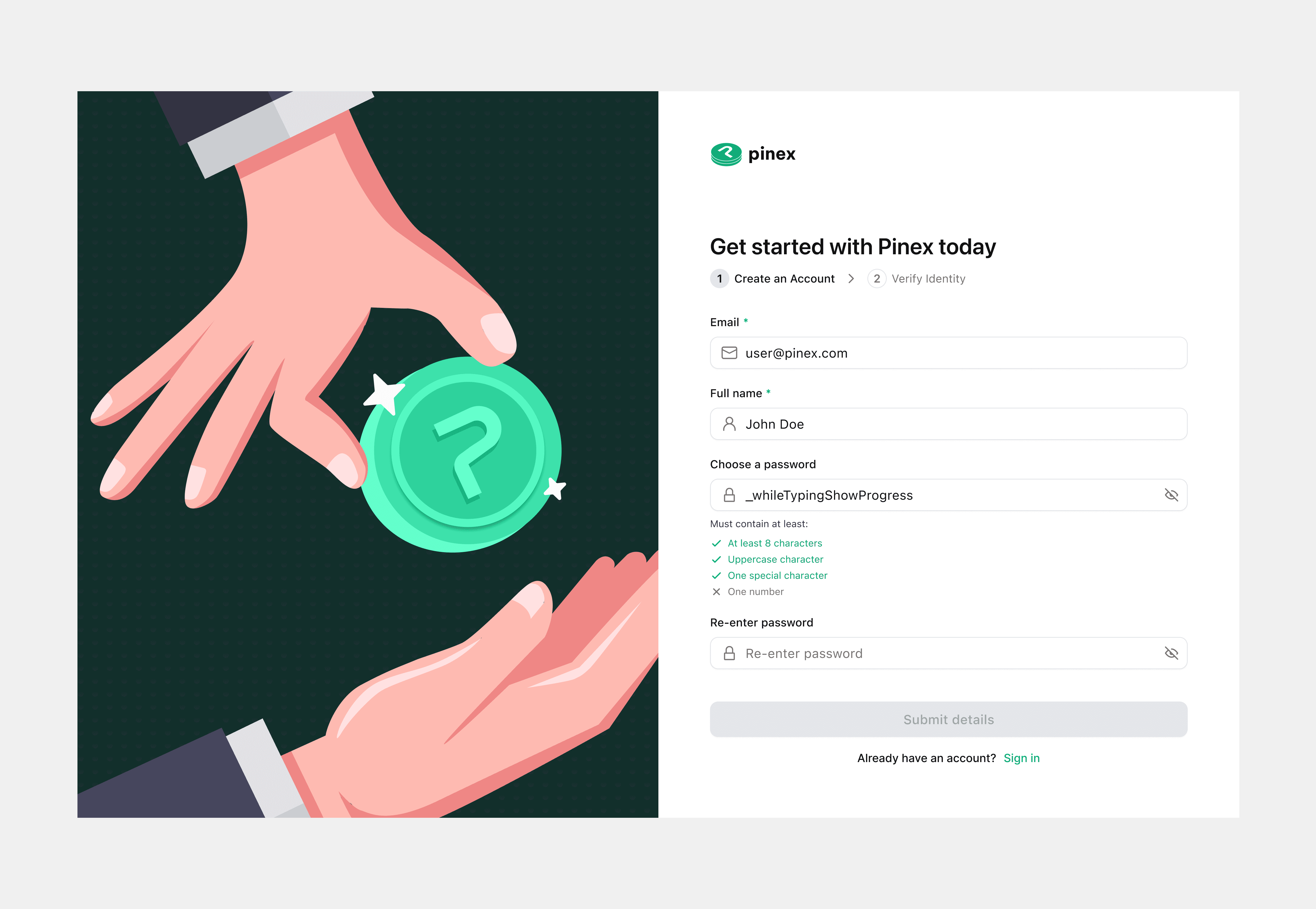
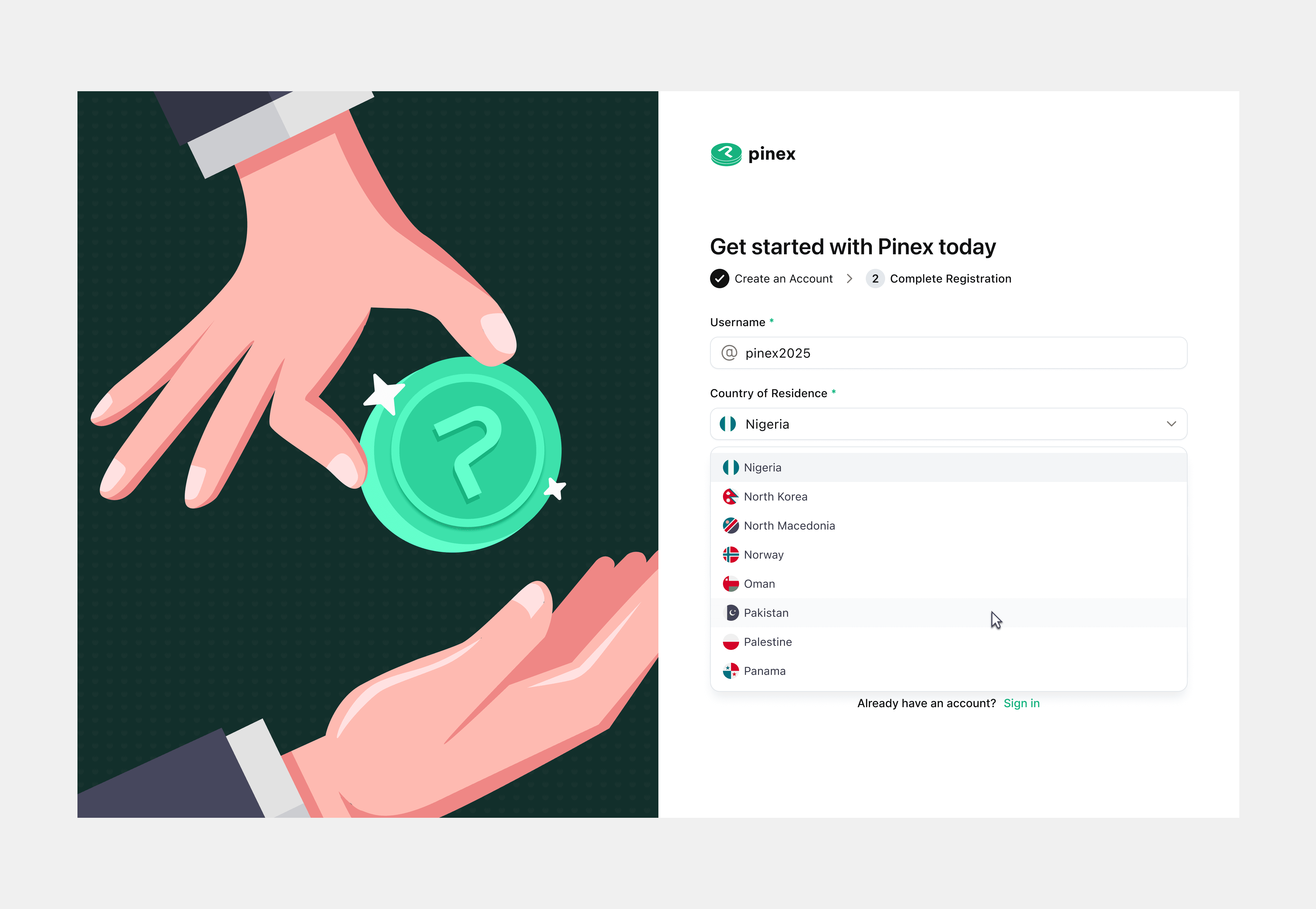
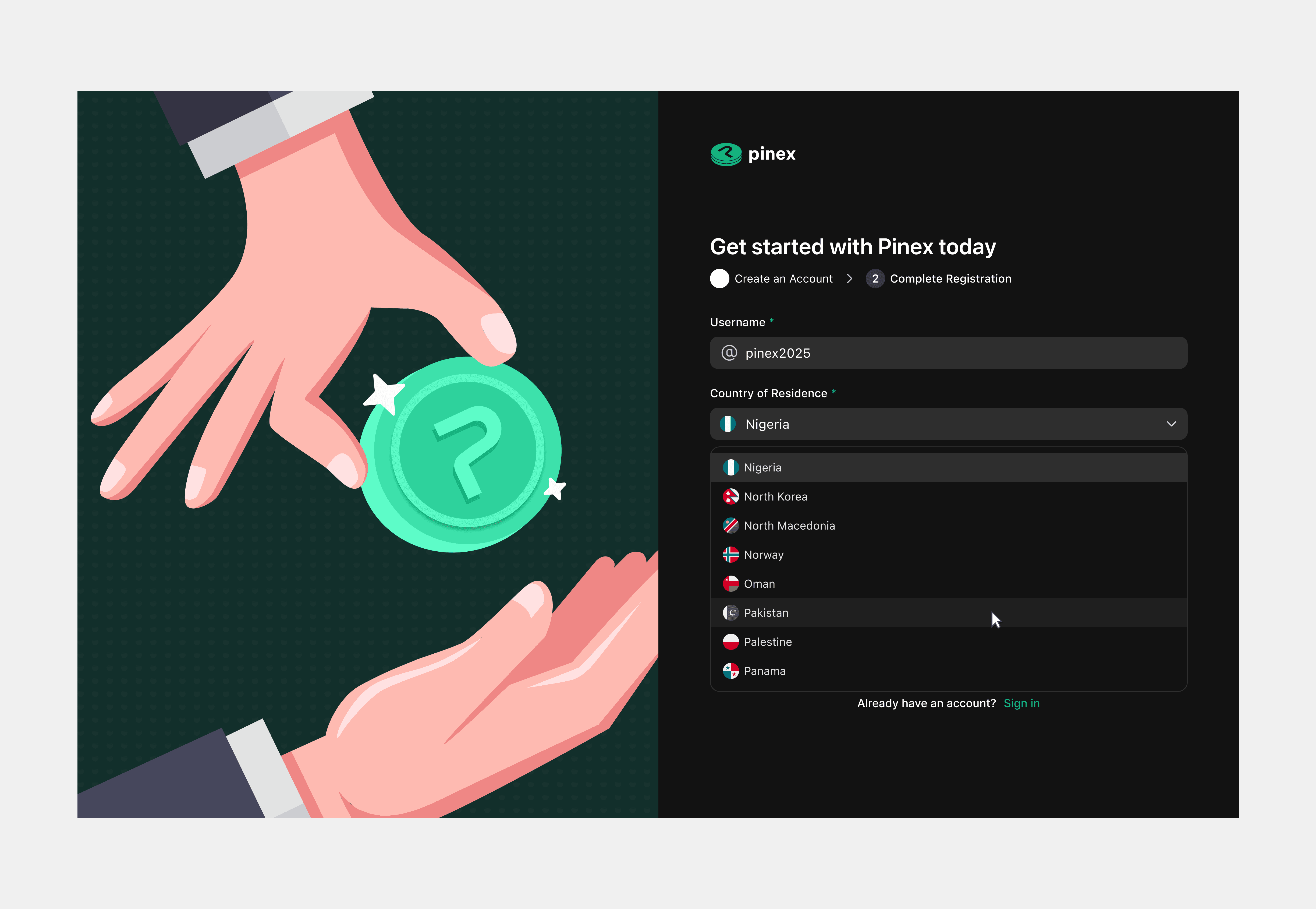
Onboarding & Authentication: Simple flow + referral input.
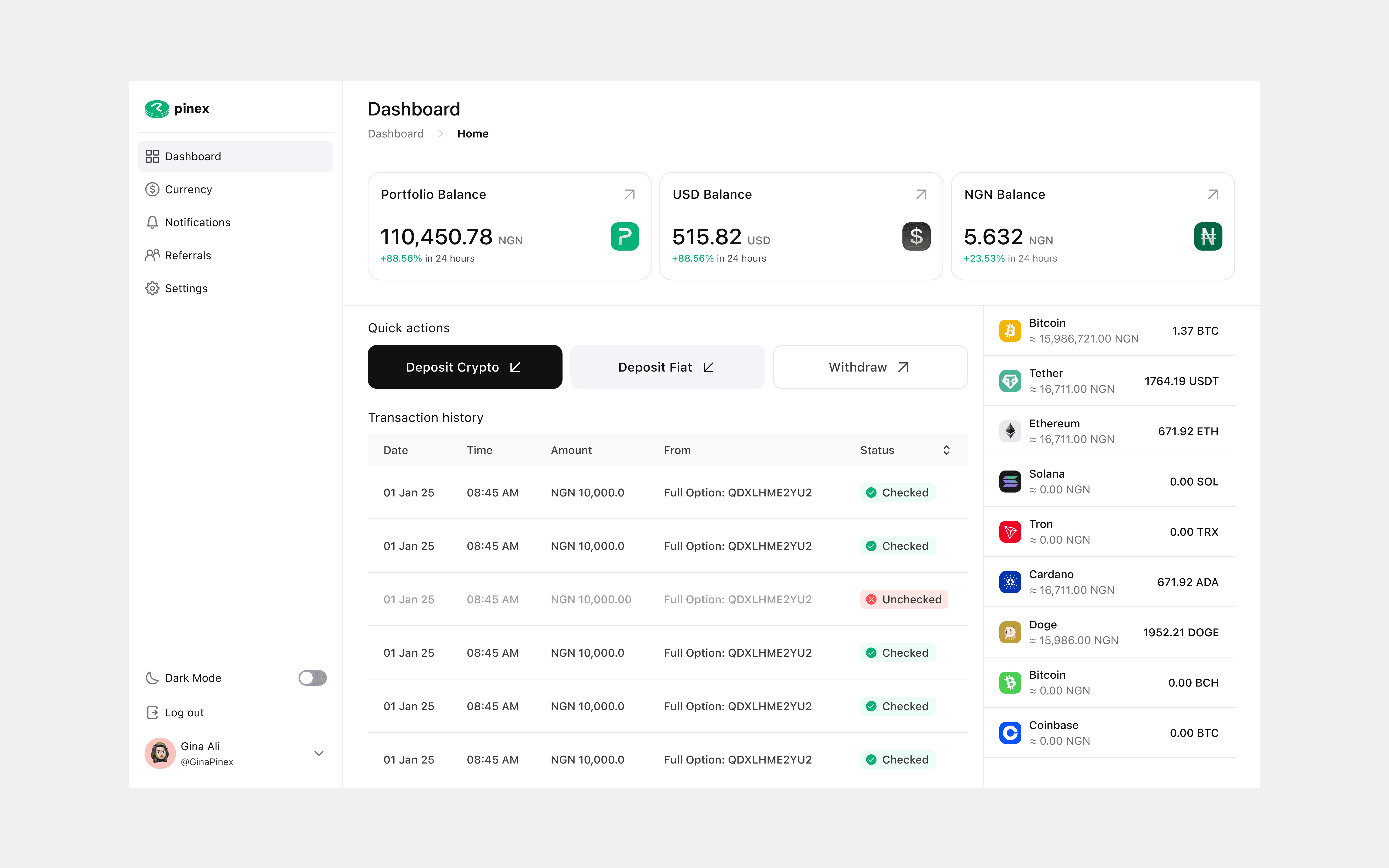
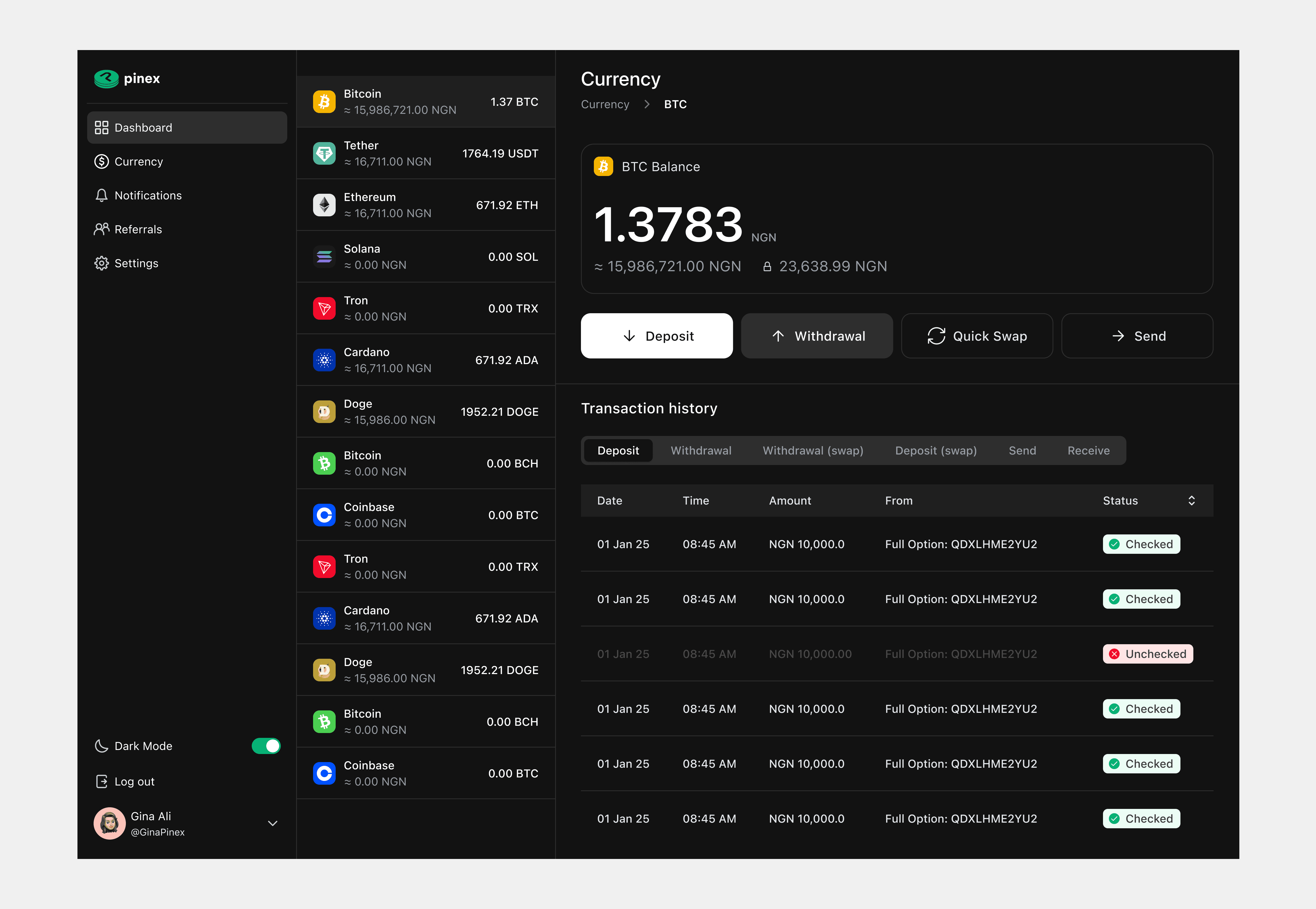
Dashboard: Progressive disclosure → surface only the most important balances first.
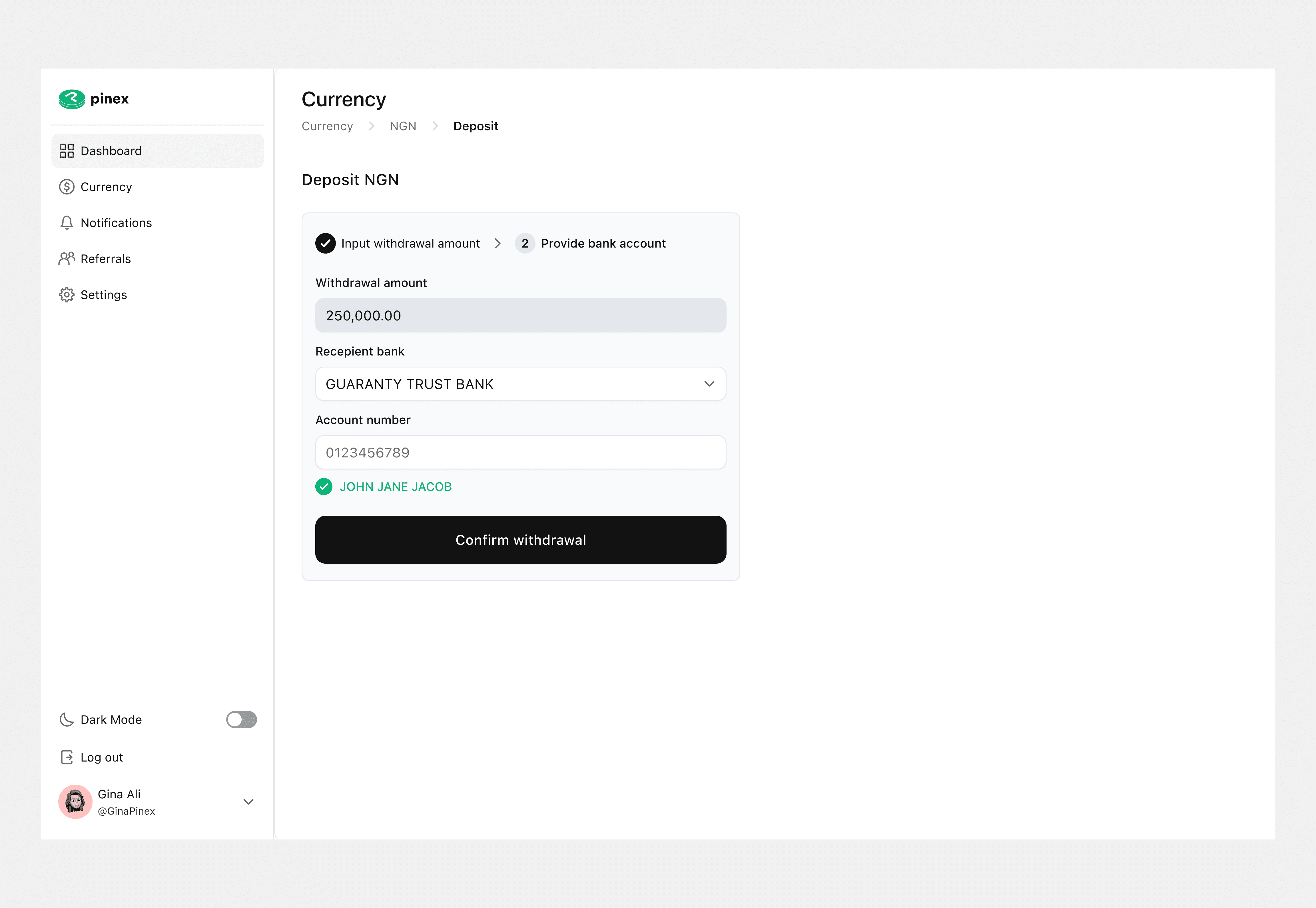
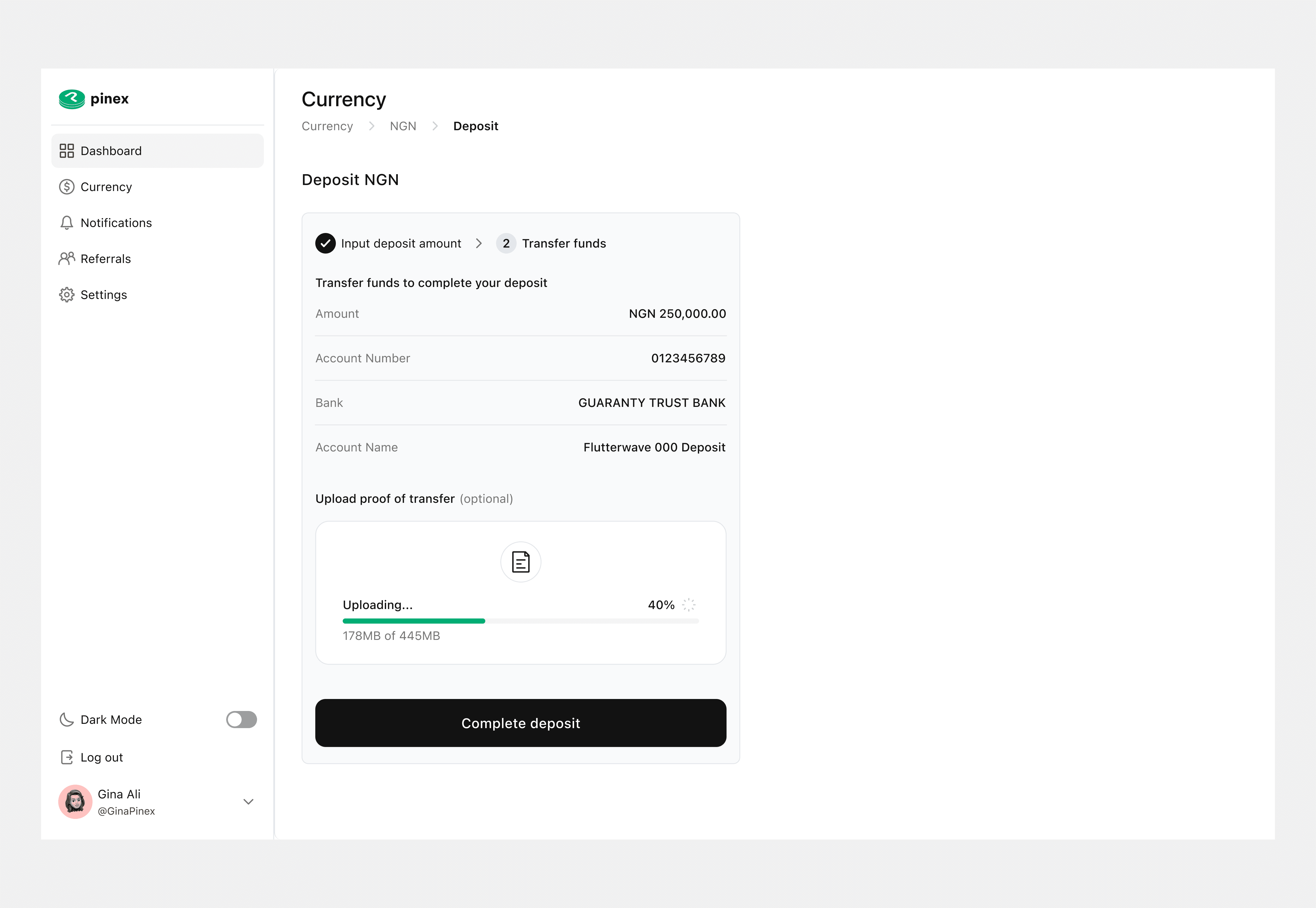
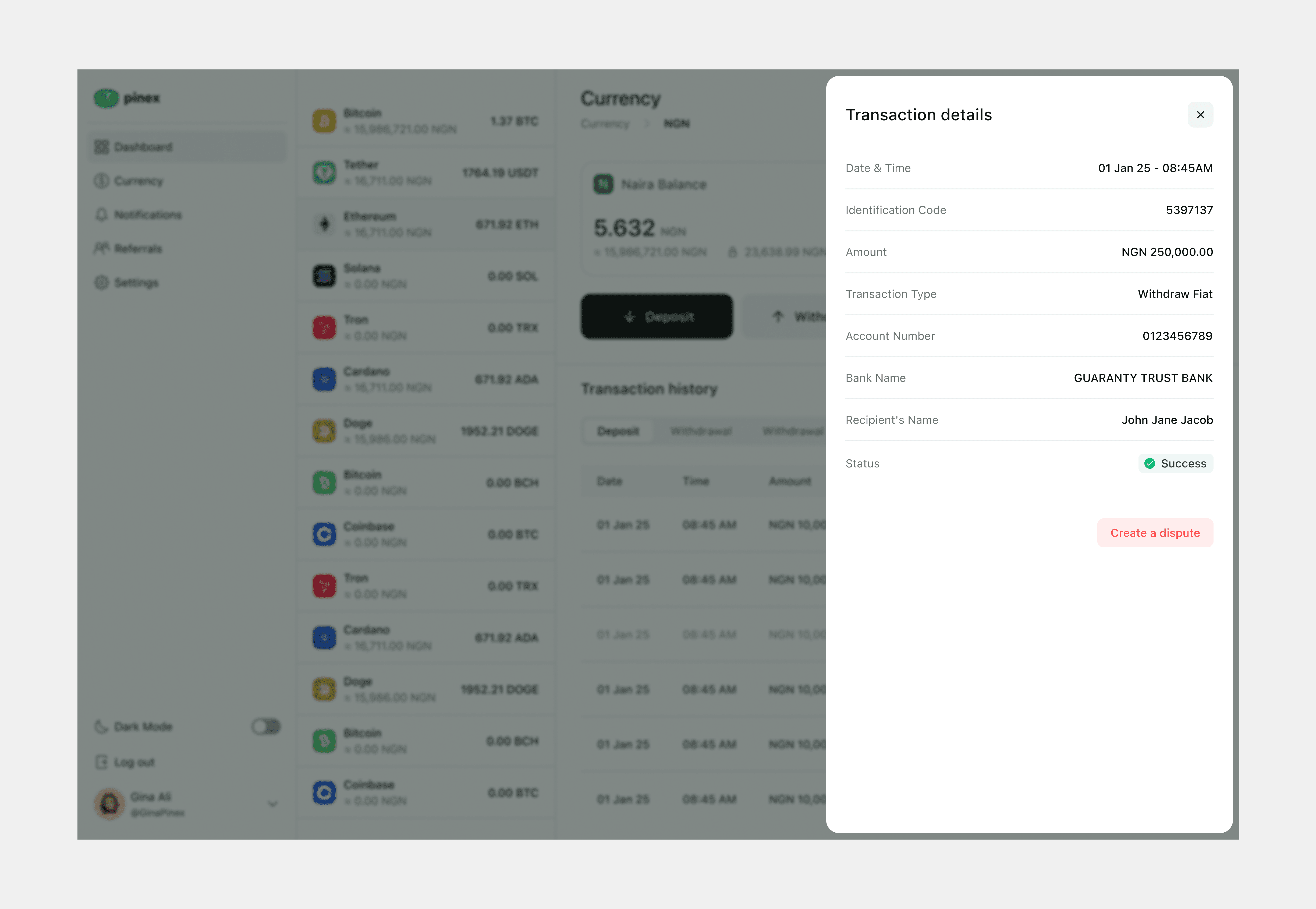
Currency Detail Screens: Deposit, withdraw, send, swap, transaction history.
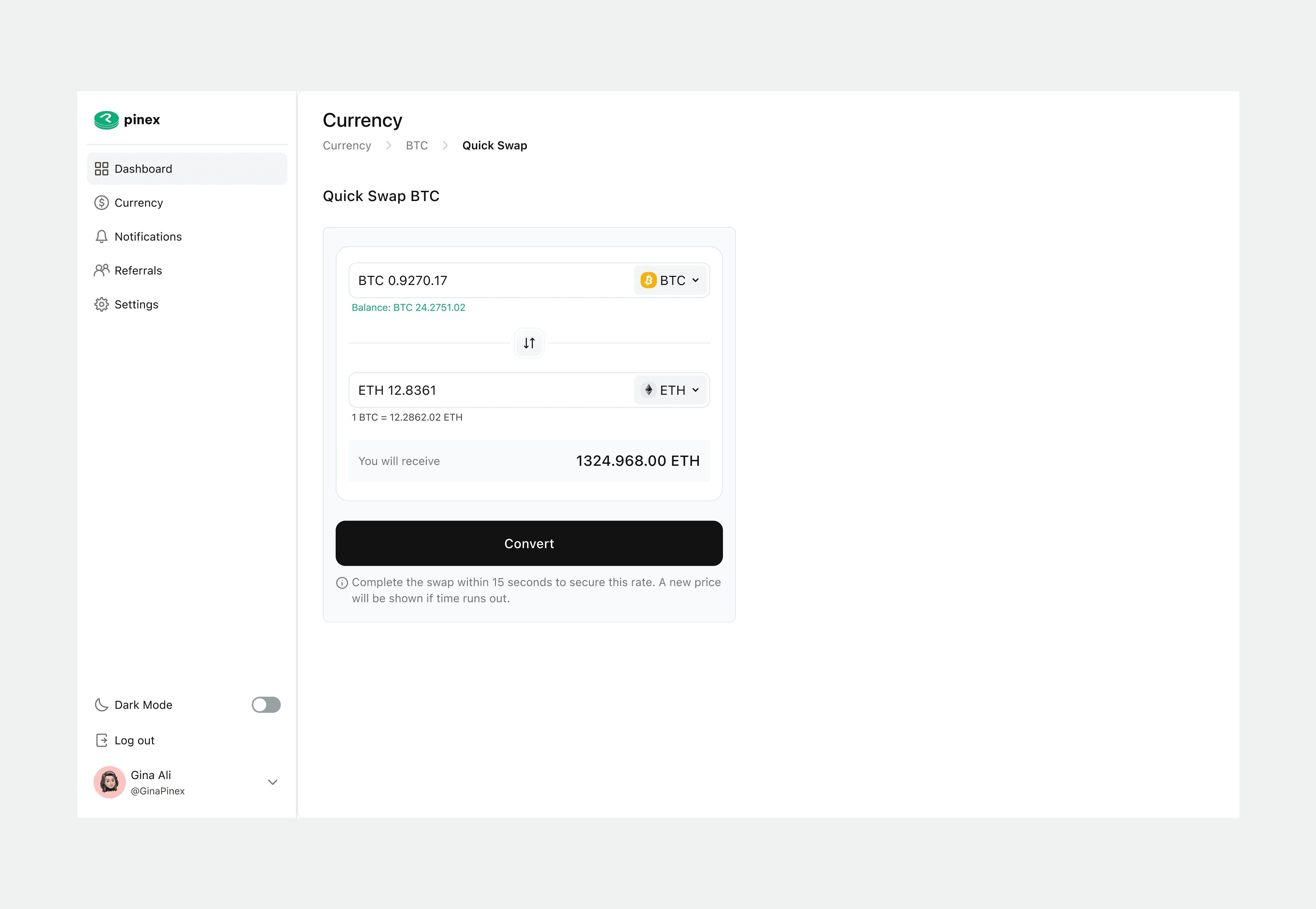
Swap Flow: Real-time dynamic rates (15-second window).
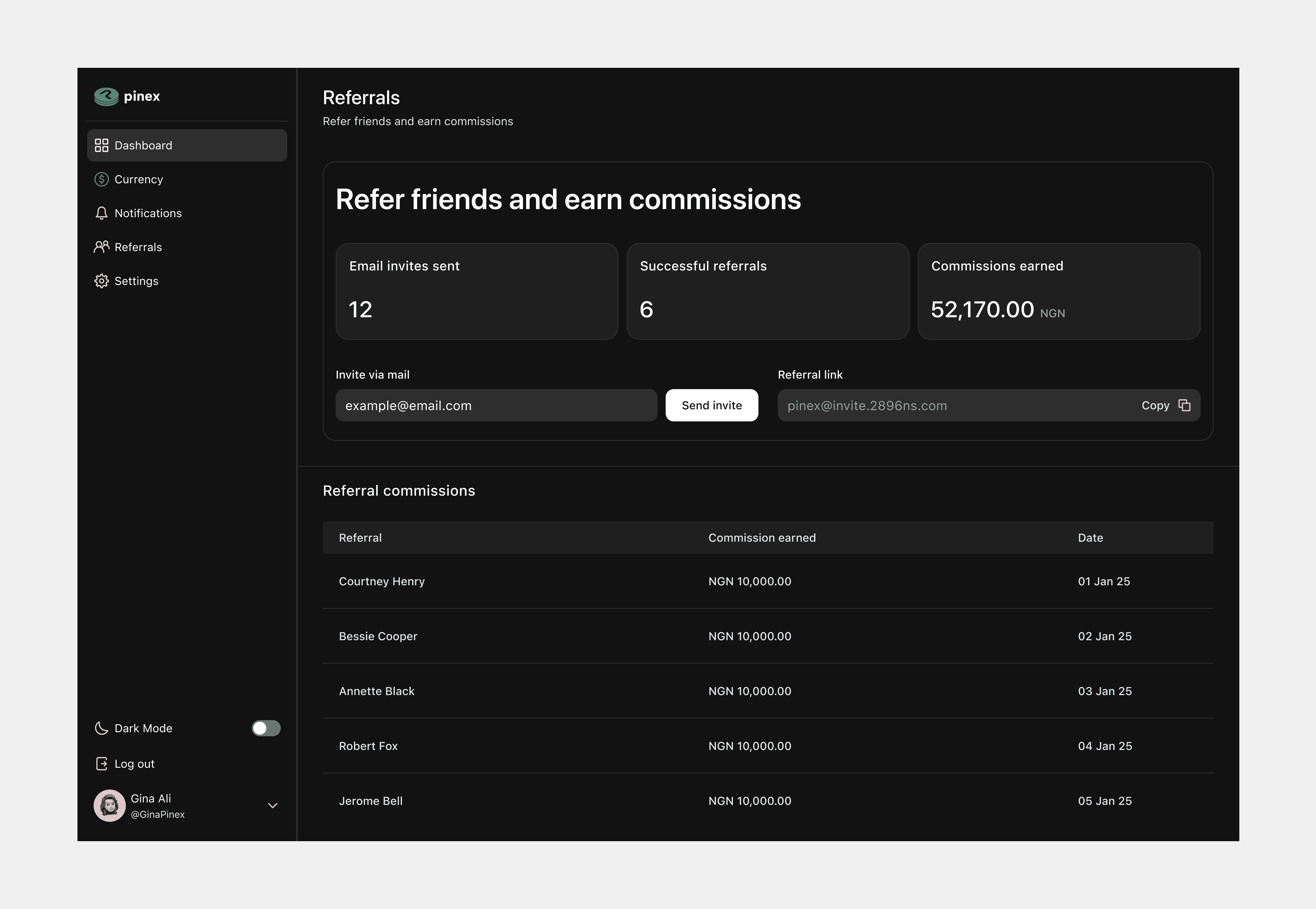
Referral System: Transparent breakdown of referrals, commissions, and earnings.
Visual Identity: Lightweight, trust-focused branding system.


Results & Impact: No launch, but valuable lessons and recognition
Although the product didn’t launch, the project left its mark in other ways. My designs became a clear blueprint for the engineers, and I received strong feedback from both the PM and developers on the usability and clarity of the system. On a personal level, it deepened my understanding of crypto UX patterns and the trade-offs between simplicity and complexity.
Project canceled before launch, so no external KPIs.
Internal impact:
Clear design system that engineers could implement.
Positive feedback from PM and devs on usability + clarity.
Learned new crypto-specific UX patterns and compliance constraints.